
The Coloniser and the Colonised: A True “Partnership of Equals?”
Updated: Aug 22
Cover image by Celeste Neo
*This article is published in collaboration with Doomscroll Diplomacy, your next one-stop platform for all things foreign affairs. Check out Doomscroll Diplomacy's telegram channel here!
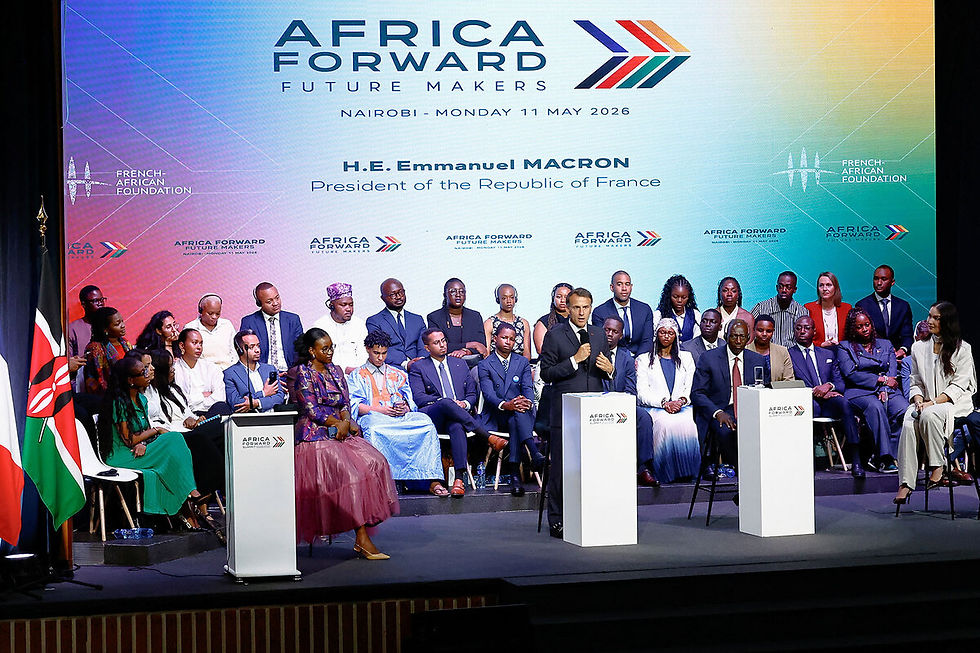
On the 11th of May, more than 30 African leaders gathered in Nairobi, Kenya, for the Africa Forward Summit co-hosted by Emmanuel Macron, the President of France. Away from the cameras and the press, the Kenyatta International Convention Centre buzzed with conversations between diplomats, investors, young founders, and translators alike. But between every handshake and new discussion arose the question that had been at the forefront of everyone’s minds: What does France have to offer Africa now?
Macron thinks he has the answer to that. In his speeches, he repeatedly stressed the importance of “equal-footing partnerships”, “looking forward”, and “independence and strategic autonomy”. France’s desires are clear: it wants to be Africa’s partner, not patron. Against a backdrop of growing anti-French sentiment and France’s growing unpopularity amongst its past West African colonies, it now seeks to look beyond past colonial ties and has set its sights on the rest of Africa.
Fiscal and governmental issues back at home, too, certainly influence Macron’s newfound interest in Africa. France’s economic outlook for the year is rapidly deteriorating, its public debt having inexorably risen to a new record high of more than 3.5 trillion euros as of this year. Still suffering from inflation and the ensuing economic fallout from the Iran war, France is also looking at slashing more than 4 billion euros in spending this year, a move accompanied by cuts to their Official Development Assistance (ODA) budget. With French fiscal capacity to provide aid to Africa now more limited than ever, it comes as no surprise that the rhetoric of an “equal partnership” is being encouraged by Macron as opposed to direct aid.
The marked transformation that the French political landscape has undergone in recent years is also an impetus for Macron to reevaluate his liberal approach to international aid. For one, increased polarisation in the French government has forced Macron to reevaluate the feasibility of maintaining high levels of international fiscal assistance in favour of more economically restrained policies. The far-left movement now chooses to prioritise domestic welfare over international aid endeavours, while the far-right’s stance on the matter remains markedly ambiguous. Such recalibration of priorities in France thus weighs heavily on Macron’s choice to push for a more equal relationship with Africa.
France’s goal of deepening ties with the whole of Africa – and not just its past colonies – is evident in the choice of location for this year’s summit. Traditionally held in French-speaking African countries since its inception in 1973, the summit was instead unconventionally held in Kenya and co-hosted by Kenyan President William Ruto. Speaking at the summit, Ruto emphasised that recognition of Africa as a full and equal partner in global governance must not be delayed. France and Africa’s partnership “must not be built on dependency but on sovereign equality, not on aid or charity but on mutually beneficial investment,” Ruto added.
Macron, on the other hand, defines this relationship as “one that serves peace, prosperity and independence and strategic autonomy”. For France, the “achievement of greater sovereignty and autonomy” as well as the reduction of economic dependency on foreign powers seem to be the cornerstones of its new policy for French-African relations. Thus, the “partnership of equals” should not be understood as one where both French and African states possess the agency and autonomy to negotiate cooperation on mutually beneficial terms.
Yet, the concept of an equal partnership between a coloniser and its past colony is a starkly idealistic notion. Even if we set aside the vestiges of France’s neocolonial tendencies, economic and developmental disparities will pose a challenge in placing both parties on equal footing. Enduring economic imbalances between France and Africa continue to constrain African strategic autonomy by producing asymmetric bargaining power, making true equality difficult to achieve despite Macron’s rhetoric. For many of France’s former African colonies for whom French colonialistic tendencies remain a fresh wound in their collective memory, the image of a shared French-African ideal approaches the farcical. Thus, all things considered, there seems to be a high chance that Macron’s quixotic fantasy of an equal partnership may not come to fruition.
Economic disparity and the CFA Franc
Perhaps the most obvious challenge that hinders Africa and France’s equal collaboration is the existing economic disparity and dependency between the two parties, giving France the upper hand in their relationship. Just by merely looking at the nominal GDP of France and Africa, the vast gap in economic development is glaring: France’s GDP is projected at 3.6 trillion in 2026, making it the seventh largest economy in the world, while Africa’s combined GDP falls short of it at 2.85 trillion. Such economic asymmetries between the two render their relationship fundamentally skewed, as more developed nations can utilise their economic prowess to dictate terms of trade, resource extraction, and more.
Indeed, France has been accused of unequal mining relations with respective African countries, most notably Niger. As French multinationals took over uranium mines in Niger, Paris relied on the energy supplied from these rapacious neocolonialistic industries to keep its streets lit. Meanwhile, despite being one of the largest producers of uranium, 90% of its population went without electricity, the abundance of Niger’s resources having benefited France far more than it did its own development.

"Everyone in Niger feels this partnership is very unequal," A former Nigerien energy minister said, citing significant inconsistencies between the agreed price for uranium and the amount paid by France.
It would also be remiss to mention economic dependencies and not bring up the CFA Franc, a colonial monetary system that remained in place long after French colonies’ independence. The CFA Franc, established in 1945 and now used by 14 African countries, mainly functions to tether African financial systems to French ones, impeding African monetary sovereignty while intentionally benefitting the French economy. For example, the CFA Franc has a fixed exchange rate to the euro, which bars African governments from devaluing their currency in response to market pressures.
Meanwhile, the fixed parity reduces transaction costs and shields French companies from exchange rate risk. The structural overvaluation of the currency also entails that its artificially high value favours imports, to the detriment of exports, once again benefitting the French economy at the expense of Africa’s development. The statistics reflect this: 9 out of 14 of CFA Franc-using African countries are amongst the Least Developed Countries, occupying the lowest ranks worldwide in terms of health and education achievements.
However, it is true that an effort has been made by France to redefine its relationship with Africa through the 2020 reforms that it introduced to the CFA Franc. The reforms saw an end to the requirement that African countries had to deposit 50% of their reserves with the French Treasury, and the removal of French representatives from the governance of the central regional bank. Yet, it remains apparent that the foundational pillars of the CFA Franc have not changed; the fixed parity and the free transfer of capital and incomes, amongst other things, still remain. In other words, the “monetary cooperation” and integration supposedly heralded by the reforms have yet to address the structural inequality of the CFA Franc.
Thus, it is evident that such monetary and fiscal relationships neither favour the structural transformation nor the regional integration of African countries, and instead merely serve to weaken them economically. And when France has historically taken advantage of its economic ties with Africa, it thus proves unlikely that an equal and fair partnership can be formed in the foreseeable future.
Neo-colonialism and worsening French-African relations
The second reason that impedes the creation of this equal collaboration is France’s neo-colonialistic tendencies that have left a large part of Africans averse to and wary of any future partnerships. Neocololialism has been commonly cited as the main obstacle hindering African economic and political sovereignty, leaving a lasting impact on African development. Vestiges of the colonial era remain in Africa to this day, manifesting themselves in unequal trade relationships, military interventions, and the continued usage of the French language in a web of influence dubbed Francafrique.
Francafrique, built on pillars of political and military support and economic ties, was once famously described by François-Xavier Verschave as “the longest scandal in the Republic”. Its eventual end would only come in the 2020s in the form of a wave of coups that swept over the Sahel in Mali, Burkina Faso, Niger, and Chad. French troops had originally been stationed there to carry out a long term counterterrorism campaign, but after communities noticed little improvement in security and an increase in civilian casualties after years of military “assistance”, a wave of Anti-French resentment grew, with massive protests breaking out. As the countries began to unceremoniously boot French troops out, military ties between France and the Sahelian countries were eventually severed.
The gnarly history of Francafrique is but one factor leading African leaders to look upon an equal relationship with increased caution, however. President Macron has also been accused multiple times of paternalistic behaviour towards African countries, sparking African leaders to criticise the hypocrisy in desiring a new relationship “free of hang-ups” while simultaneously employing a condescending tone towards African partners. “I think they forgot to say ‘thank you’ ” for France’s military assistance, Macron once remarked bitterly to his French counterparts, referring to the decades-long deployment of French troops in the Sahel. In response, Chad’s president, Mahamat Idriss Déby Itno, shot back, saying that Mr. Macron was “living in the wrong era,” and that his comments “border on contempt for Africa and Africans.”

This was not the only instance of poorly thought-through comments made by the French. Even during this year’s Africa Forward Summit, geared towards the reframing of French-African relations, Macron’s actions ironically drew criticism in both France and Africa. Appearing visibly frustrated by the noise in the room during a panel at the summit, he abruptly walked onto the stage and asked the speaker to hand him the microphone so he could “restore order”. He then proceeded to rebuke audience members for what he called “a total lack of respect”. “Just imagine what would happen if an African leader did the same thing in America or Europe,” said Thierno Mbaye, a history student at a university in Dakar, in response to Macron’s intervention.
Beverly Ochieng, a senior analyst at geopolitical risk consultancy Control Risks, said Macron’s remarks were raising questions about whether France’s renewed engagement with Africa represented a genuine equal partnership or merely convenient rhetoric. Clearly, a growing trend of French paternalistic framing rubbing many Africans the wrong way can be observed, undeniably causing more scepticism towards an “equal partnership” and making it less likely to come to fruition.
Rising Geopolitical Competition in Africa
Lastly, Africa’s growing prominence on the global stage makes it even less incentivised to partake in a so-called “equal relationship” with France when there are a multitude of other possible partnerships up for grabs by Africa. Around the world, a greater number of countries than ever are beginning to realise the natural advantages African countries wield: the world’s youngest and fastest-growing workforce, a wealth of natural resources, and a rapidly growing market size. The critical minerals needed for batteries, electric vehicles and clean energy transition are found in Africa, along with vast opportunities in the renewable energy sector. Thus, in today’s increasingly multipolar world and an era of shifting geopolitical priorities, Africa’s political weight is hard to dismiss, a fact that nations around the world have started to recognise.
The rapidly rising number of Africa +1 summits hosted by countries vying for the continent’s attention perfectly depicts this. Recent years have seen Africa hold cooperative talks with Saudi Arabia, South Africa, and Turkey, to name a few. In particular, however, the outsized influence of Russia and China, who have hosted the Russia-Africa Summit and the Forum on China-Africa Cooperation respectively, on the African continent is not to be overlooked.
For one, China’s presence in Africa poses a challenge to the construction of an equal French-African partnership. China, having displaced France as the leading exporter to most of France’s former colonies, has largely succeeded in deepening its footprint in Francophone West Africa, and now enjoys deeper diplomatic, political, and economic ties with Africa. In recent years, for example, China has significantly expanded its security engagements in Africa through training programs with African countries, joint military drills, and the sale of Chinese arms and equipment. Chinese companies have also moved into sectors such as extractives and telecoms that have long been dominated by French players, forcing French national giants to go toe to toe with Chinese competitors. It is thus safe to assume that China’s influence threatens French interests, and not merely in the above aspects.
In an attempt to break through as one of the leading foreign powers in Africa, China has long tried to contrast its “win-win” relationship with Africa with French neocolonialism, a rhetoric helped along by simmering anti-French sentiment in West Africa. China’s interests in Africa are broad and more formally integrated, striving to establish a new global order with itself at the helm through programs that construct a new trading system and bolster security. As a West African parliamentarian recently told Tom Bayes, a Visiting Academic Fellow at the Mercator Institute for China Studies, “China offers us room to breathe”. The risk of France being run out of its former Sahelian stomping grounds is thus apparent, a threat exacerbated by the unshakeable presence of China as an alternative foreign power in Africa.
Russia’s proximity to many African countries is also a worrying factor that could impede French-African partnership. Since Russia had begun expanding its outreach to Africa over a decade ago, it has maintained an opportunistic approach, taking advantage of continuous instability in the region to establish its influence. Its activities there are largely self-serving; its goals revolve around countering Western influence, accessing natural resources, and profiting from security contracts. Exploiting the perceived failure of French-led security efforts, Russia has begun providing mercenaries, weapons, and media operations, often without the explicit conditions that come with Western deals. In the long run, the reality is that Russia’s activity in Africa can, and will, undermine African relationships with the West.
Conclusion
While Macron has taken meaningful reforms to distance France from the paternalistic legacy of Francafrique, a genuine partnership of equals between France and Africa remains more of an aspiration than a feasible reality. The many undeniable economic disparities between the two parties pose the largest hindrance to the construction of such a relationship with strategic autonomy. After all, without a level playing field – one that can only be constructed from institutional independence and equal economic capability – how can both parties be able to negotiate from an equal and fair position? Structural reforms would first have to be made in economic systems, not to mention the cultural shifts in mindset needed to rectify France’s occasionally paternalistic approach. Then, and only then, would a true “partnership of equals” be able to bloom.
References
“A Shameful Anniversary: The CFA Franc at 80 – IDEAs.” 6 January 2026.
Banchereau, Mark. “Macron Faces Backlash After Interrupting Africa Summit.” AP News, 13 May 2026, https://apnews.com/article/africa-macron-summit-kenya-interruption-5186f15010ec1854ff31d725c904b42e
“China in Francophone West Africa: A Challenge to Paris | Merics.” 28 May 2020.
Christophe Premat. What Is Françafrique? The Taboo Word That Reveals the Shifting Influence of France in Africa. 3 Nov. 2025, https://theconversation.com/what-is-francafrique-the-taboo-word-that-reveals-the-shifting-influence-of-france-in-africa-268129 10.64628/aaj.wwhwqardm.
Cosnard, Denis. “France’s Public Debt Soars Above €3.5 Trillion.” Le Monde.Fr, Le Monde, 25 June 2026, https://www.lemonde.fr/en/politics/article/2026/06/25/france-s-public-debt-soars-above-3-5-trillion_6754865_5.html?srsltid=afmbooqlxaq4imlfosnwcttpsl69zyyctv_aehupyjutfc9sfobgo0ym
“Delphi Global Research Center.” Delphi Global Research Center, 2026, https://delphigrc.org/research/russia-and-china-in-africa-interests-influence-and-instruments-of-power
Emmanuel, Macron. “Speech by the President of the French Republic during the Opening Plenary of the Africa Forward Summit.” Elysee, 12 May 2026, https://www.elysee.fr/front/pdf/elysee-module-26617-en.pdf
“Greenpeace Africa.” Greenpeace Africa, 22 July 2026, https://www.greenpeace.org/africa/en/op-ed/60659/africa-france-summit-must-go-beyond-rhetoric-and-genuinely-redefine-global-cooperation/
La Rédaction. “Franc CFA Reform: Changes, Statusquo and Unknowns.” Cemac ECO Finance, 21 May 2020, https://cemac-eco.finance/franc-cfa-reform-changes-statusquo-and-unknowns/
Leali, Giorgio. “French Budget Faces €4B in Cuts as Iran War Hampers Growth.” 20 Apr. 2026.
Mureithi, Carlos. “Macron Seeks Allies and a Foreign Policy Less Tied to France’s Colonial Past at Africa Summit.” The Guardian, 12 May 2026.
Nairobi, Anne Macharia in. “At the Africa Forward Summit, a Different Conversation About France.” RFI, 27 May 2026, https://www.rfi.fr/en/africa/20260527-at-the-africa-forward-summit-a-different-conversation-about-france
“Navigating France’s Political Landscape: Implications for International Development Aid.” 14 January 2025.
Nimi Princewill. “Macron’s Claim That Africans Failed to Say ‘Thank You’ for French Military Aid Sparks Outrage.” 7 January 2025.
“Policy Updates.” 2026.
Schwikowski, Martina, and Philipp Sandner. “Are Niger's Uranium Supplies to France Under Scrutiny? – DW – 09/28/2023.” 28 September 2023.
Siegle, Joseph. “Russia’s New Frontier in Africa – Africa Center.” Africa Center, 8 July 2026, https://africacenter.org/spotlight/russias-new-frontier-in-africa/
“The CFA Franc as a Vivid Symbol of Colonial Continuities in Francophone Africa.” 22 March 2021.


Comments