
The Feasibility of a Publicly Funded Legal Service
Cover image by Cathleen Ong
Seventy-eight years after its founding, the United Kingdom (UK)’s National Health Service (NHS) has faced extensive criticism for its bureaucratic inefficiencies, and a rising trend of transitioners to private healthcare.
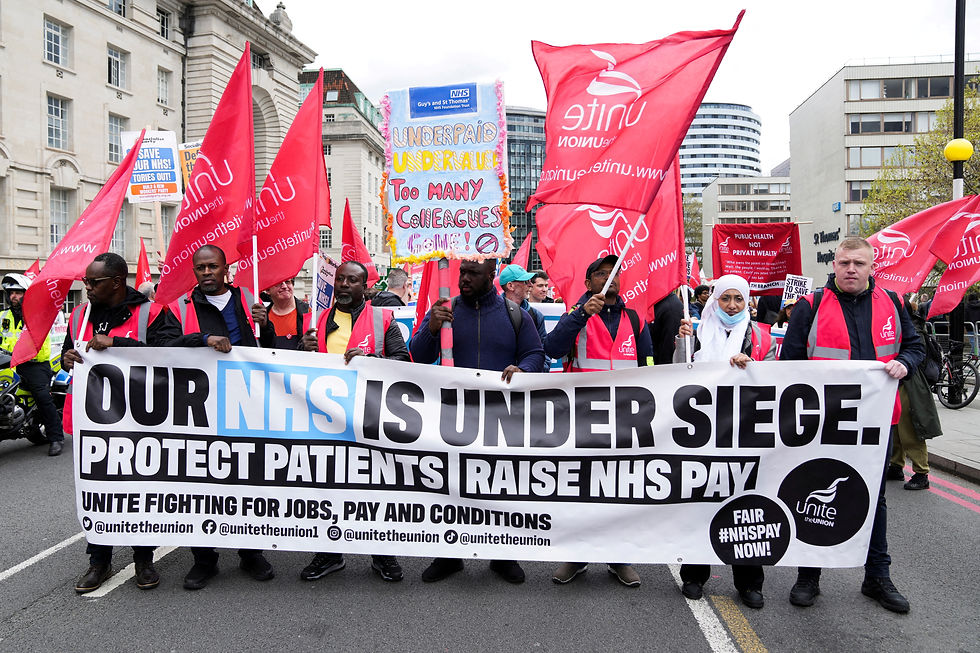
While a myriad of flaws surround the healthcare system, it still retains its role as a cornerstone accessible to all. Similar to healthcare, there is a moral case in justice as an enshrined right, and offering equal access to legal aid has significant potential to improve society. Therefore, it is no question that governments should theoretically provide a fully funded legal service. However, its feasibility ultimately hinges on sustainability–it is impractical to provide for a fully publicly funded legal service free at the point of use. A more viable approach lies in a robust private-public partnership, together with government-led assessments of applications based on means and merits tests, bolstered by a cost-benefit analysis framework.
Philosophers emphasise the salience of equal access to justice, made possible through a publicly funded legal service. Life and health are considered universal rights as passed under the Human Rights Declaration, and unbarred access to justice has been pursued since medieval times. With healthcare becoming a recognised public good, access to legal representation should similarly evolve into a systemic right. But why do countries like Australia choose to shift from charity to institutionalised support?
Philosopher Ronald Dworkin attributes equal access to justice to how resources should be offered as an enshrined right. His theory argues that all individuals are defended by a liberal concept of equality, which is executed through equal access to justice. This is seconded by Article 6 of the European Convention on Human Rights which stipulates how all individuals deserve the right to fair trial. In Simeonovi v. Bulgaria, it was held that the complainant’s lack of access to a lawyer for the first few days of detention was in violation of Article 6. The strict observance of the clause to the point where a temporal ceasure in access was deemed a violation, underscores the law’s unequivocal commitment in ensuring equal access to justice.
Beyond philosophical frameworks which justify a publicly funded legal service, governments must consider a clearer working interpretation for operational feasibility. Currently, the definition of health has been critiqued for its overt flexibility, and its ambiguity is further exacerbated by vague perimeters in what patients ‘need’ and what service is ‘adequate’. This has augmented the difficulty in assessing whether the service attained its goals effectively. Therefore, referencing India’s Legal Services Authorities Act 1987, legal service is defined as:
Legal counselling–advice and guidance in legal matters,
Legal advice–interpreting the law to a set of facts
Legal adjudication–dispute resolution.
The parameters have also been set as such to differentiate between a publicly funded legal scheme and pro-bono system, which will be expanded on subsequently.
Equal access to justice made possible through a publicly funded legal service is paramount for social investment and commitment to fair rule of law. Justice is on paper, portrayed as a public good, which translates to equal opportunity granted to those seeking legal representation. Like roadlights and policing, a legal system’s benefits should be non-excludable–being available to most, and non-rivalrous–one person’s enjoyment of it does not prevent another person’s enjoyment.

However, in reality, there is a conspicuous cost disparity between the financially able and disadvantaged, who are disproportionately affected and struggle to afford legal representation. With a publicly-funded legal service, marginalised individuals who otherwise would have to pay $10,000 or more in the United States (US) system, can be fairly represented. How this expands to society is illustrated through the New Zealand case Bain v The Queen. In this mass murder, David Bain was the sole survivor of a family of five. Whilst originally convicted in 2007, he sought legal aid and appealed his charge, ultimately attaining acquittal in 2009. A case like Bain’s elucidates how the courts provide a sui generis, or unique service. Beyond its users, the legal system’s value extends to those who gain awareness of their rights and benefit from the establishment or amplification of the law.
To further demonstrate a publicly funded legal service’s positive impact on society, a 2024 study commissioned by the UK’s Community Justice Fund estimated that investing in such a system would save the Treasury a total of £4,000,000,000, while employing 235,000 more individuals. Beyond economic growth and savings, a move towards publicly funded legal defence system is also judicially symbolic, signifying an unwavering conviction to upholding the presumption of innocence–prima facie–for both parties. Without genuine access to justice, the service risks abiding by a rule of law which no longer serves the individuals who require it most. Therefore, a publicly funded legal service is erudite for individual savings, societal progression, judicial reasons, but fundamentally because of its moral case.
Given that a publicly-funded legal service spurs economic growth, saves on public spending, and upholds justice, what explains the challenges associated with its formal implementation?
The first issue is in classifying equal access to justice as a prioritised need, and hence dedicating scarce resources in providing a publicly funded legal service. The “need” of access to justice is often compared with other critical issues like education and housing. Therefore, governments should through adopting a Welfare Economics lens, assess and compare the net benefits of the publicly funded legal service to that of other public and private programs. Governments would also measure whether net benefits surpass the return which capital in a private market would demand. This comparison is drawn because taxing individuals results in governments removing funds from the capital, channeling it to the legal service instead.
A possible issue is the difficulty in measuring the legal service’s long-term benefits-and-costs. While benefits can be classified into compensation, deterrence and insurance, these terms are more qualitative. For instance, one can only determine ex-ante behaviour, and predict future actions which were deterred through legal aid, eventually still struggling to attach monetary value to it. How governments can consider mitigating the ambiguity is in adopting a package of approaches–contingent valuation, which estimates a client’s willingness-to-pay (WTP) for a service, and a survey modelled after Australia’s 5 pointer-scale effectiveness metric. Overall, the quantitative analysis method competently measures client satisfaction, ideally reducing system inefficiencies.
A second concern is preventing misappropriation of funds, which can be addressed through a clearly defined public interest test, as well as a means and merits assessment. Detractors posit that when society allows private litigation costs to be reimbursed by public funding, they vest in legally represented parties an ex officio authority to misuse the sum. To prevent this from occurring, a clearly defined public interest test should act as a litmus test. Combining both merit and means, the test’s merit component will feature governments ranking cases by a system, and how these cases influence the public. Research in the UK revealed a desert of aid–where cases in immigration, housing and community care were neglected. Therefore, in addition to family cases, which were clustered and inferred to serve as a root cause, these civil cases should be prioritised to protect vulnerable families.
The priority should be shared with criminal cases, whose verdicts shape social order and safety. The ranking system will also assess settlement and contract disputes on a case-by-case basis. Regarding the criminal law merits test, courts should first examine whether the applicant benefits from legal representation or has reasonable grounds to defend his case. This is important as it prevents societies from wasting scarce resources on cases with unlikely outcomes. In addition to the above merits tests, civil law cases should be further assessed using a means test. Current policy research, particularly on the Legal Aid Bureau (LAB) in Singapore, revealed that publicly funded legal service in civil law brought substantial benefits for the lower income, but at the expense of tipped equality for the middle class. Therefore, a proposed expansion of income cap from the current 35% to 40% creates more space for them to seek access.

Opponents of the view that a publicly funded legal service should ensue find it incongruous that public funds are used to both prosecute an accused person and defend them. However, the government’s emphasis on equal access to justice and championing the presumption of innocence emboldens how fair trial is offered to all parties. This means that even beyond public interest, assessments to grant aid are not simply based on moral reprehensibility. This also links to how governments in providing a publicly funded legal service, must above all else prevent detrimental economic loss, which could be incurred if parties were unaware of their rights and course of action.
Pro-bono services differ from publicly funded legal service in structure and ultimately, behave as a complementary approach to competent legal representation. The essential dissimilarity between the two lies in how pro-bono lawyers willingly represent their clients for little to no costs, while the legal service are paid under a salaried model. In the UK for example, this difference culminates in multiple funders for pro-bono clinics incorporating contradictory assessment measures. Furthermore, research displays how pro-bono firms are more hesitant to undertake administrative law cases, a significant pain point for disadvantaged clients, due to possible repercussions in securing government legal work.
Critics claim that a publicly funded legal service serves a similar purpose to pro-bono clinics, hence rendering it futile. Pro-bono agencies act as complements to the publicly funded legal service, but should not exist in silo since they are bound by technical constraints. Therefore, the relationship between these services should be viewed as part of a larger framework aiming to aid marginalised individuals.
“All citizens should enjoy equality before the law and there should be no necessity for a golden key to unlock the courtroom door”. Justice, like health, is essential to a dignified life. While the moral case for a fully publicly funded legal service is evident, it is overly idealistic to envision a fully funded service free at the point of use. Overall, rigorous safeguards and combined public support with private sector involvement, are essential for ensuring long-term viability and fair access to justice.
References
Anderson, B., Semyonov, A., & Glebov, S. (2003). Legal Services “for the public good.”Ab Imperio, 2003(3), 57–73. https://doi.org/10.1353/imp.2003.0068
Buckwalter-Poza, R. (2016, December 8). Making Justice Equal. Center for American Progress. https://www.americanprogress.org/article/making-justice-equal/
Council of Europe. (1950). European Convention on Human Rights. https://www.echr.coe.int/documents/d/echr/Convention_ENG
David Cullen Bain v The Queen - SC 13/2009. (2009). Courts of New Zealand. https://www.courtsofnz.govt.nz/cases/david-cullen-bain-v-the-queen-
ECHR. (2025). HUDOC - European Court of Human Rights. Coe.int. https://hudoc.echr.coe.int/eng#{%22itemid%22:[%22001-172963%22]}
Fully govt-funded legal aid has its challenges: Legal fraternity. (2020, November 5). The Straits Times. https://www.straitstimes.com/singapore/challenges-facing-fully-govt-funded-legal-aid-bu t-initiative-a-crucial-step-for-singapores
Gayle, N. (2013, July). WHAT ENSURES EFFECTIVE STATE-FUNDED LEGAL AID SYSTEM? (a Guide for the Reform of the Current State-Funded Legal Aid System in Jamaica. https://www.luc.edu/media/lucedu/prolaw/documents/GAYLE%20LEGAL%20AID%20( 1).pdf
Lee, R. (1985). The American Courts as Public Goods: Who Should Pay the Costs of Litigation? https://scholarship.law.edu/cgi/viewcontent.cgi?article=2072&context=lawreview
Legal Aid in the Eye of a Storm: Rationing, Contracting, and a New Institutionalism on JSTOR. (2025). Jstor.org. https://doi.org/10.2307/1410624
Lochav, M., & Bhatacharjee, M. (2018). FACTORS INFLUENCING THE EEFICIENCY OF JUDICIARY A PUBLIC GOOD PROVISION. GSJ, 6(7). https://www.globalscientificjournal.com/researchpaper/
Defending the public purse: The economic value of the free legal advice sector - The Access To Justice Foundation. The Access to Justice Foundation. https://atjf.org.uk/supporting-free-legal-advice-would-save-treasury-4bn-next-year
Math, S. B., Kumar, N. C., & Harish, T. (2013). Legal aid in hospitals: An innovative approach. The Indian Journal of Medical Research, 137(3), 440. https://pmc.ncbi.nlm.nih.gov/articles/PMC3705650/
MOL, M. of L. (2024). Response by Minister for Law K Shanmugam at the Committee of Supply Debate 2024. Mlaw.gov.sg. https://www.mlaw.gov.sg/news/parliamentary-speeches/response-by-minister-shanmuga m-at-committee-of-supply-debate-2024/
Nations, U. (2023). Universal Declaration of Human Rights | United Nations. United Nations. https://www.un.org/en/about-us/universal-declaration-of-human-rights
Oral Answer by Minister for Law K Shanmugam to PQs on the Public Defender’s Office. (2023). Mlaw.gov.sg.https://www.mlaw.gov.sg/news/parliamentary-speeches/oral-answer-by-minister-k-shanm ugam-to-pqs-on-pdo/
Owers, A. (2000). Public Provision of Legal Services in the United Kingdom: A New Dawn? Fordham International Law Journal, 24(6). https://ir.lawnet.fordham.edu/cgi/viewcontent.cgi?article=1782&context=ilj
Prescott, J. (2010). The Challenges of Calculating the Benefits of Providing Access to Legal Services, 37 Fordham Urb. Fordham Urban Law Journal, 37, 303. https://ir.lawnet.fordham.edu/cgi/viewcontent.cgi?article=2329&context=ulj
Tan, E. (2025). Institutional Knowledge at SMU. Smu.edu.sg. https://ink.library.smu.edu.sg/cgi/viewcontent.cgi?article=5611&context=sol_research
Wacks, R. (2014). 3. Dworkin: the moral integrity of law. Philosophy of Law, 49–64. https://doi.org/10.1093/actrade/9780199687008.003.0003
Ziady, H. (2023, February 6). Britain’s NHS was once idolized. Now its worst-ever crisis is fueling a boom in private health care. CNN. https://edition.cnn.com/2023/02/06/business/nhs-strikes-private-healthcare-uk/index.html


Comments